
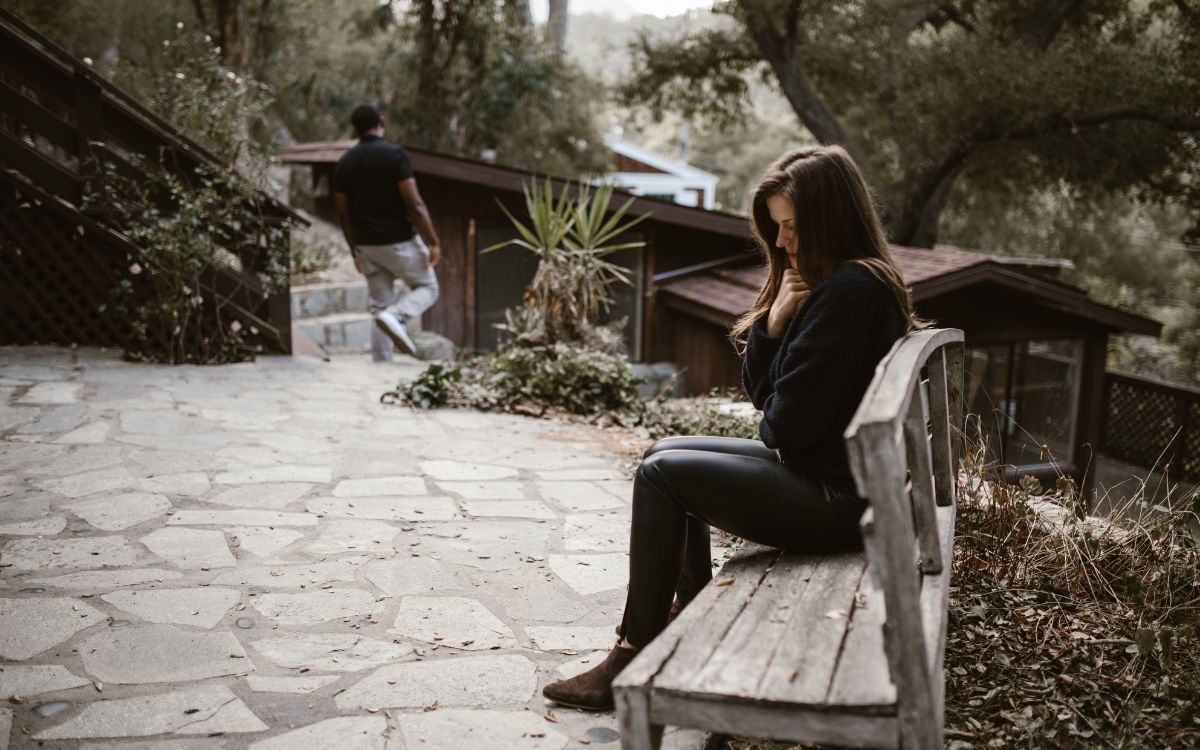
Your heart races. Your stomach churns. Your mind spins. Is this love? Or fear? Relationship anxiety is common. Normal, even. Especially early on. Butterflies. Doubts. Wondering “Do they like me?” “Are we okay?” “Where is this going?”
But sometimes, that anxiety isn’t just nerves. It isn’t simply your attachment style talking. It becomes something bigger. Heavier. Something that doesn’t just worry you. It consumes you. It steals your peace. It poisons your connection.
How do you know the difference? When does normal worry cross the line? When is it unhealthy? Toxic even? Knowing the signs is crucial. It’s the first step back to calm. Back to yourself. Back to a healthier love.
It’s More Than Butterflies: Understanding the Shift
Attachment styles explain patterns. Anxious attachment? You might crave closeness. Fear abandonment. Seek reassurance. That’s a framework. A tendency. It influences how you relate.
Unhealthy relationship anxiety is different. It’s not a pattern. It’s a storm. It takes those tendencies and cranks them to eleven. It becomes relentless. Disabling. It invades every corner of your life. It feels out of control. It stops being about the relationship. It starts being the relationship.
Think of it like weather:
-
Attachment Style: A predictable climate. Maybe often cloudy with a chance of rain (worry).
-
Unhealthy Anxiety: A constant, destructive hurricane. No calm eye. Just relentless wind and rain.
Your Body Sends Distress Signals (Listen!)
Your body knows. Long before your mind catches up. Unhealthy anxiety screams through your physical self. Pay attention.
-
Constant Tension: Shoulders tight? Jaw clenched? Stomach in knots? All day? Every day? This isn’t pre-date jitters. This is your body on permanent high alert. Like a soldier waiting for an attack that never stops.
-
Sleep Under Siege: Lying awake for hours? Mind racing about your partner? What they said? What they didn’t say? Waking up panicked? Dreams filled with rejection or betrayal? Exhaustion becomes your normal. Your body can’t heal.
-
Appetite Gone Haywire: Forget eating. Food seems pointless. Or maybe you eat everything. Seeking comfort. Or numbness. Your body’s rhythm is broken.
-
Panic Attacks: Sudden waves of terror. Heart pounding. Can’t breathe. Dizzy. Feeling like you’re dying. Often triggered by a thought about the relationship. Or a text not answered fast enough. This is your nervous system overloaded.
-
Feeling Constantly Sick: Headaches. Stomach aches. Low immunity. Always catching colds. Chronic stress wears your body down. It takes a real toll.
Your Thoughts Are a Broken Record (And It’s Playing Nightmares)
Unhealthy anxiety twists your thinking. It lies. It exaggerates. It traps you in a loop of worst-case scenarios. Your mind becomes a dangerous place.
-
The “What If” Spiral: It starts small. “What if they’re bored?” Then plunges deep. “What if they’re cheating? What if they never loved me? What if I end up alone forever?” You can’t stop it. Logic doesn’t help.
-
Mind Reading (And It’s Always Bad): You know what they’re thinking. And it’s never good. “They sighed. They must be annoyed with me.” “They didn’t text back. They’re definitely losing interest.” You interpret everything as proof of doom.
-
Catastrophizing is Your Default: A small issue becomes the end. A minor disagreement means “They hate me, it’s over.” A busy day for them means “They’re avoiding me.” Everything feels like a disaster.
-
Overanalyzing Obsessively: Replaying conversations. Scrutinizing texts. Looking for hidden meanings. Did that comma mean anger? Was that “okay” actually passive-aggressive? Hours lost. Mental energy drained.
-
Intrusive Thoughts You Hate: Ugly thoughts pop in. Unwanted. Disturbing. “Do I even love them?” “What if I cheat?” “What if they die?” These feel terrifying. Like they reveal a hidden truth. They don’t. They’re just anxiety noise.
-
Constant Self-Doubt: “Am I good enough?” “Am I too much?” “Why would they stay?” Your inner critic is loud. Relentless. It erodes your self-worth.
Your Actions Speak of Fear (Not Love)
Unhealthy anxiety doesn’t stay in your head. It leaks out. It drives behaviors. Often behaviors you hate. Behaviors that push your partner away. Behaviors that hurt you.
-
Compulsive Checking: Location sharing constantly. Social media stalking. Their ex’s profile. Their friends’ profiles. Looking for clues. Proof. Anything. You check again and again. It never eases the fear for long.
-
Reassurance Seeking on Overdrive: “Do you love me?” “Are you sure?” “Are you mad?” Asking constantly. Needing constant proof. Texts. Calls. Promises. It’s never enough. The doubt creeps back in minutes.
-
Testing Your Partner: Creating situations to see how they react. Cancelling plans to see if they care. Pretending to be upset. Trying to trigger jealousy. This isn’t playful. It’s manipulative. Driven by fear.
-
Avoiding Conflict (Or Creating It): Terrified of any disagreement. Swallowing your needs. Walking on eggshells. Or the opposite: Picking fights. To test commitment. To force reassurance. To release the tension. Both are destructive.
-
Isolating Yourself (Or Them): Pulling away from friends. Family. Hobbies. All energy goes into managing the anxiety. Or the relationship. Or, trying to control their time. Resenting their friends. Wanting them only for yourself.
-
Ignoring Your Own Life: Work suffers. Responsibilities pile up. Passions fade. Your entire world shrinks to the size of your anxiety about the relationship. Your identity fades.
The Ripple Effect: When Anxiety Poisons Everything
Unhealthy anxiety doesn’t stay contained. It spreads. Like spilled ink. It stains everything around you.
-
Relationship Strain: Your partner feels pressured. Watched. Never trusted. Never enough. They might withdraw. Get frustrated. Resent the constant neediness or accusations. The very thing you fear (abandonment) becomes more likely. You push them away with both hands.
-
Friendship Fade: You talk about nothing else. Your friends get tired. They worry. They might pull back. You cancel plans because you’re too anxious. Or too consumed by relationship drama. You lose vital support.
-
Work & Life Suffer: Concentration is shot. Motivation gone. Calling in sick because you’re too distressed. Missing deadlines. Performance drops. Your career pays the price.
-
Losing Yourself: Who are you outside this fear? You might not know anymore. Hobbies forgotten. Goals abandoned. Your spark dims. Anxiety becomes your identity.
-
Physical Health Decline: Chronic stress isn’t just feeling bad. It weakens your immune system. Raises blood pressure. Contributes to serious illness. Your body breaks down.
Key Differences: Attachment Tendency vs. Unhealthy Anxiety
It’s crucial to spot the line. Here’s the difference:
| Feature | Attachment Tendency | Unhealthy Anxiety |
|---|---|---|
| Intensity | Worry, manageable | Overwhelming, disabling terror |
| Duration | Comes & goes, situational | Constant, relentless background noise |
| Control | Can often soothe self | Feels completely out of control |
| Impact on Life | Mild disruption occasionally | Significant damage to work, health, friendships |
| Reassurance | Helps temporarily | Never enough, constant craving |
| Self-Perception | Aware of tendency | Feels like core identity |
-
Attachment Tendency: “I felt worried when they didn’t text back for a few hours. I distracted myself with a show, and felt better when they replied.”
-
Unhealthy Anxiety: “They didn’t text back in 20 minutes. I spiraled into panic, convinced they were leaving. I called 10 times. Checked all their socials. Couldn’t work. Felt sick for hours. Even after they replied, I needed constant proof for days it wasn’t a lie.”
When It’s More Than Anxiety: Red Flags You Can’t Ignore
Sometimes, intense anxiety is a symptom. A warning sign of something deeper. Something wrong in the relationship itself.
-
Your Gut Screams “Unsafe”: You feel deeply insecure. Not just anxious. Unsafe. On edge. Like walking on broken glass. This isn’t just your attachment style. This might be your intuition spotting real danger. Emotional abuse. Manipulation. Volatility. Listen to that feeling.
-
Your Partner Fuels the Fire: Do they dismiss your feelings? Call you crazy? Use your anxiety against you? Threaten to leave during arguments? Play hot-and-cold? Gaslight you? (“I never said that! You’re imagining things!”). This is not your anxiety causing problems. This is a problematic partner causing your anxiety. Your reaction might be extreme because the situation is genuinely threatening.
-
Consistent Disrespect or Neglect: Are your core needs ignored? Is there constant criticism? Contempt? Stonewalling? Infidelity? Your anxiety might be a rational response to a bad relationship. Not an irrational disorder.
-
You Feel Worse, Not Better: A healthy relationship, even with anxious tendencies, should bring moments of security. Joy. Comfort. Does yours? Or do you feel constantly worse? More drained? More insecure? More lost? The relationship itself might be toxic.
Taking Back Control: What Can You Do?
Seeing these signs is hard. It hurts. But it’s powerful. It means you can change. You are not powerless. Here’s where to start:
-
Acknowledge It: Say it out loud. “My relationship anxiety has become unhealthy.” This isn’t weakness. It’s courage. The first step.
-
Talk to Someone (Not Just Your Partner): Reach out. A trusted friend. Family member. But crucially: A Therapist. Find one specializing in anxiety or relationships (CBT – Cognitive Behavioral Therapy – is often very effective). This isn’t a luxury. It’s essential repair work. They give you tools. Perspective. Support.
-
Practice Radical Self-Care (Non-Negotiable): Your body and mind are exhausted. Prioritize:
-
Sleep: Make it sacred.
-
Nutrition: Fuel your body well.
-
Movement: Walk. Dance. Yoga. Release the tension.
-
Grounding: Learn techniques (deep breathing, 5 senses exercise) to pull yourself out of spirals now.
-
-
Challenge the Thoughts (Gently): When the “What ifs” start, ask:
-
“What’s the actual evidence for this thought?”
-
“What’s a more likely explanation?”
-
“Is this thought helpful?”
-
“What would I tell a friend in this situation?” Don’t fight the thoughts. Question them. Loosen their grip.
-
-
Set Boundaries (With Yourself Too):
-
Limit Checking: Set specific times. Delete social media apps if needed. Cold turkey.
-
Delay Reassurance Seeking: When you want to ask “Do you love me?”, pause. Write it down. Wait 30 minutes. See if the urge passes. Challenge the thought instead.
-
Reclaim Your Time: Schedule activities without your partner. Stick to them. Reconnect with friends. Hobbies. You.
-
-
Talk to Your Partner (Carefully): If the relationship is basically healthy, communicate. Use “I” statements. “I’ve been struggling with intense anxiety. It’s about me, not you. I’m working on it in therapy. What I need right now is [patience/support in X way].” Don’t blame. Own your struggle. Ask for specific support.
-
Evaluate the Relationship (Honestly): Is your anxiety mostly internal? Or is the relationship truly unsafe or unhealthy? Be brutally honest. If it’s the latter, leaving might be the only path to peace. Therapy helps you see this clearly.
Healing is Possible (You Are Not Broken)
Unhealthy relationship anxiety feels like a prison. It is heavy. Exhausting. But listen: It is not your destiny. It is not who you are. It is a state you are in. And you can change it.
Healing takes time. Effort. Patience. It’s messy. There will be setbacks. That’s okay. Every time you choose therapy, choose self-care, challenge a thought, you chip away at the prison walls.
You learn to hear the anxious voice. And choose not to obey it. You learn that feelings are not facts. You learn to trust yourself again. Not just your partner. Yourself.
You discover calm. You reclaim your life. Your energy. Your joy. You build a relationship based on presence. Not panic. On connection. Not control. On genuine love. Not desperate fear.
It Starts Today
Notice the signs. That’s step one. You’ve done that just by reading this. Feel the fear. Acknowledge the struggle. Then take one small action. Just one.
-
Book a therapy consultation.
-
Take three deep breaths right now.
-
Write down one thing you love about yourself (unrelated to your partner).
-
Step outside for five minutes of fresh air.
Your journey back to yourself starts with a single step. A single choice. Choose yourself. Choose peace. Choose healing. You deserve a love that feels safe. You deserve a mind that feels like home. It is possible. Start now.