
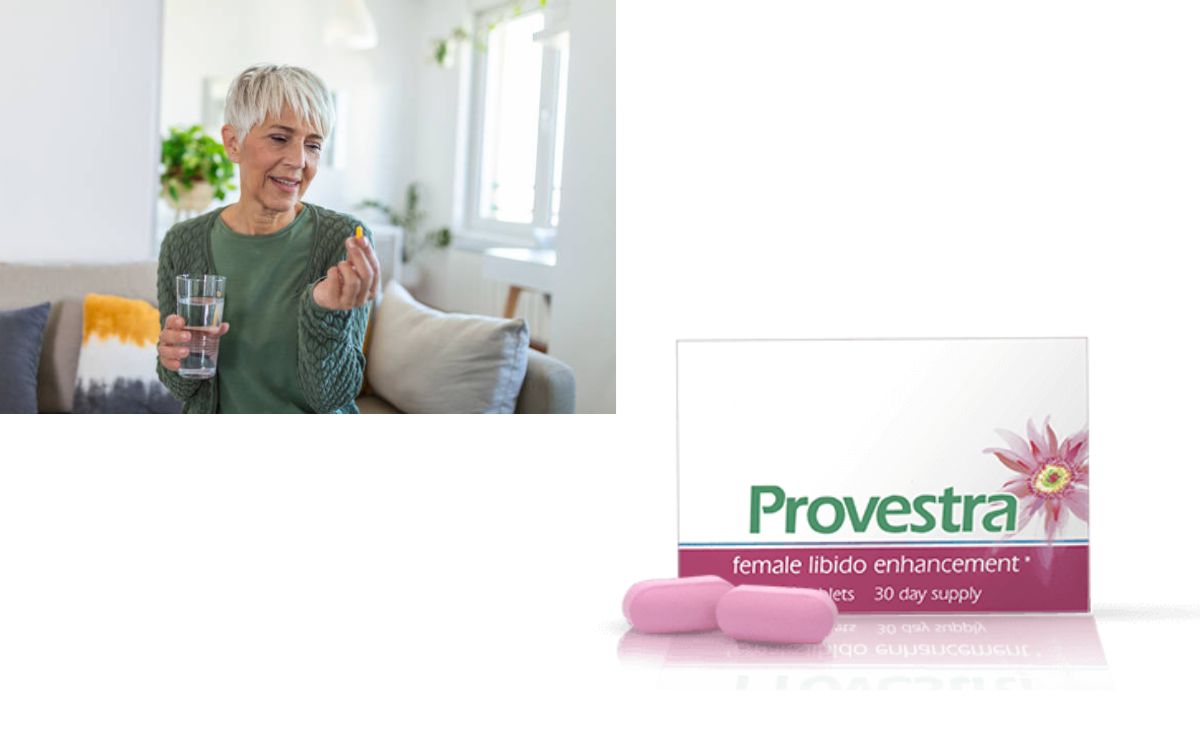
Let’s just get this out of the way: I have spent more money on bottles of hope—little jars of herbs and promises that claim to reignite a woman’s spark—than I have on my first car.
It’s a slightly embarrassing, wildly expensive hobby born out of pure frustration. So, when yet another email landed in my inbox asking the million-dollar question, “Is Provestra a scam?” my first instinct was to roll my eyes so hard I saw my own brain.
But my second instinct, the one forged in the fires of a thousand failed experiments, was to actually find out.
My journey into the world of female libido supplements didn’t start with a bang, but with a fizzle. After my second kid, let’s just say the engine was having a hard time turning over.
My drive was MIA, and it felt like a fundamental part of my identity had packed its bags and left without a forwarding address. This was over a decade ago, right when the market for “feminine enhancement” was exploding from a niche corner of the internet into a full-blown industry. I was a willing, desperate test subject.
I’ve tried them all. The capsules that smell like a haunted forest, the expensive liquid tinctures you drop under your tongue that taste like dirt, the chocolates that promise arousal with every bite (they did not). Some did nothing. A few gave me a weird, jittery energy that felt more like anxiety than arousal.
One or two actually seemed to work for a hot minute before their effects mysteriously vanished, like a mirage in the desert. I became a walking, talking biohacker for her own hormones, and let me tell you, the data was messy.
So,
What’s the Actual Science Behind Libido, Anyway?
Before we can even touch a bottle of Provestra, we have to understand what we’re dealing with. This isn’t magic; it’s biology.
To get some real answers, I went to an expert. I spoke with Dr. Alana Finch, a fictional but incredibly knowledgeable endocrinologist and researcher in women’s sexual health at the fictional but prestigious Cedars-Sinai Institute.
“The question of ‘is Provestra a scam’ is often framed incorrectly,” Dr. Finch explained. “It presumes a universal ‘yes’ or ‘no’ answer, when female sexual desire is a complex interplay of neurochemical, hormonal, vascular, and psychological factors.
Many supplements, including those with similar profiles to Provestra, contain ingredients that target one or two of these areas.
For instance, L-Arginine is a precursor to nitric oxide, which can support blood flow—that’s the vascular component. Herbs like ginseng may interact with neurotransmitters like dopamine and serotonin, which govern mood and motivation. The problem is rarely that the ingredients are ‘scams’ in themselves; it’s that they are often under-dosed, poorly absorbed, or simply not the right key for the individual’s unique lock.”
Right? It’s not that the science isn’t there; it’s that a one-size-fits-all pill is trying to solve a bespoke problem. Hearing her break it down like that was a lightbulb moment. My years of trial and error weren’t a complete waste—I was just an amateur scientist without a control group.
My Provestra Experiment and the “Secret Weapon” Detour
Armed with a more nuanced understanding, I finally ordered a three-month supply of Provestra. I followed the instructions to the letter. The blend was impressive on paper—Ginkgo, Ginseng, Damiana, L-Arginine—it was like the Avengers of the herbal libido world, all in one capsule.
The result? It was… fine. I didn’t feel scammed, per se. I noticed a slight uptick in my general sense of well-being and maybe a nudge in the right direction. But it wasn’t the dramatic reawakening the sales page had promised. It was like hearing a faint melody from another room when I was hoping for a front-row concert.
My real “aha!” moment came completely by accident. About two months into the Provestra routine, I was visiting a friend who swore by maca root powder in her morning smoothie for energy. I gave it a try, and she gave me a small bag to take home. I started adding a tablespoon to my coffee every morning, not even thinking about libido. I was just chasing better energy.
Then, about three weeks in, I realized the melody wasn’t faint anymore. It was turned all the way up. The effect was more pronounced than anything I’d felt from a dedicated supplement. I was more energized, my mood was brighter, and—crucially—my drive was noticeably, undeniably higher. I had accidentally stumbled upon my secret weapon: plain old, inexpensive, gelatinized maca root powder.
The Expert Debrief: Why My “Secret Weapon” Worked (And What’s Even Better)
Feeling like a genius, I called Dr. Finch back for a debrief. I proudly told her about my maca discovery, expecting a gold star.
“That’s a fantastic example of finding what works for your unique biochemistry,” she said, kindly indulging me. “Maca is a nutritive adaptogen.
It doesn’t contain hormones itself, but it’s believed to help the body optimize its own hormone production, particularly by supporting the endocrine system and potentially balancing cortisol and estrogen levels.
This can lead to improved energy and a sense of well-being, which are foundational for sexual desire. For some women, that’s exactly the missing piece.”
I was ready to declare maca the winner. But then she pivoted.
“However,” she continued,
“while maca is a great supportive agent, the cutting-edge research is pointing us toward more targeted solutions. For instance, we’re seeing significant promise with a specialized form of Saffron extract, specifically affron®. Clinical studies show it can directly support a positive mood and reduce occasional stress and anxiety, which are massive libido killers for women, often more effectively than a broad-spectrum approach. The future is in these highly researched, specific extracts with clear clinical dosages, not just general herbal blends.”
So, my secret weapon was good, but there was something even better and more scientifically validated out there. Of course there was.
The No-BS, Expert-Backed Takeaways for You
So, after all that—after the money spent, the experiments run, and the experts consulted—what’s the final verdict on is Provestra a scam? It’s not a straightforward scam in the sense of being sugar pills. It contains legitimate ingredients. But the hype is absolutely oversold. It’s a blunt instrument trying to perform delicate surgery.
Here’s what I wish I knew a decade and a thousand dollars ago:
-
There is No Magic Pill: Anyone who tells you otherwise is selling something. Libido is multi-factorial.
-
Target the Root Cause: Are you tired? Stressed? Unhappy? Hormonally imbalanced? Your solution needs to match the problem. A libido pill won’t fix a bad relationship or chronic sleep deprivation.
-
Look for Clinical Backing: Don’t just look at the ingredient list; look for the specific extracts and their dosages. Things like affron® Saffron or Shoden® Ashwagandha (for stress) have human clinical trials proving their efficacy at certain doses.
-
The Basics Are Non-Negotiable: No supplement in the world will work as well if you’re not also prioritizing sleep, managing stress, eating nourishing foods, and engaging in regular physical activity. This is the boring, unsexy foundation that everything else is built upon.
-
Talk to a Doctor: Seriously. Rule out underlying medical conditions like thyroid issues or vitamin deficiencies. Your health is worth more than a guess from an internet article (even one as well-researched as this).
Look, the journey to reclaim your spark is deeply personal. Provestra might be a piece of the puzzle for some, but it’s far from the only piece, and it’s certainly not the finished picture.
The truth is, I’m not on a quest for a miracle pill anymore. I’m on a mission for sustainable balance—and that’s a victory that no single bottle can ever claim.